

Namibia Honeymoon Itinerary (3 Weeks Self-Drive Route)
The Perfect 3-Week Namibia (Honeymoon) Itinerary
Planning a honeymoon in Namibia feels different from planning almost any other trip. The distances are longer, the roads emptier, and most days are shaped more by landscapes than by schedules.
For us, that was exactly the appeal. We weren’t looking for a traditional honeymoon with resorts and beach days, we wanted something quieter, more remote, and a bit more adventurous. Namibia turned out to be one of the few places where you can drive for hours without seeing anyone, yet still arrive somewhere that feels special.
What we didn’t expect beforehand was how much the driving itself would become part of the experience. The landscapes constantly shift from mountains to desert to ocean and some of the most memorable moments happen somewhere in between destinations. This 3-week self-drive itinerary reflects that balance: combining iconic highlights with quieter stops, while mixing camping with more comfortable lodge stays to keep it sustainable over time.
Namibia Itinerary Overview (21 Days Route)
We travelled from May 2 to May 23, which turned out to be an ideal time. This period falls within Namibia’s colder dry season, with cool mornings and evenings but comfortable daytime temperatures. It’s also one of the best times for wildlife viewing, as animals gather more frequently around water sources. The hotter dry season runs from around September to December, when temperatures can become significantly more intense, especially in desert areas like Sossusvlei.
We chose to do this as a self-drive trip, booking everything ourselves instead of following a pre-arranged tour. That decision shaped the entire experience. It gave us the freedom to move at our own pace, stop whenever we wanted, and mix camping with lodge stays, but it also meant navigating long distances and planning each step ourselves. In the end, that independence became one of the most rewarding parts of the trip.
Throughout the journey, we combined a mix of camping and lodge stays, which worked better than expected. Camping made the experience feel more connected to the environment, while lodge stays gave us time to recover after longer drives or more demanding days. The route follows a loop: Windhoek → Naukluft → Sossusvlei → Swakopmund → Spitzkoppe → Damaraland → Etosha → Okonjima → Windhoek.
Day-by-Day Namibia Itinerary
Windhoek to Naukluft (Start of the Trip)
One of the decisions we made early on was to skip staying overnight in Windhoek. Instead, we picked up our 4×4 from Namibia2Go and started driving immediately. This made the first day more intense—especially after a long flight—but it also meant that within a few hours, we were already surrounded by open landscapes instead of city streets.
Starting the trip this way was probably the biggest adjustment. Driving for several hours on gravel roads requires focus, particularly at the beginning. At the same time, it’s also where the trip immediately starts to feel different. The landscape changes quickly, traffic disappears, and the sense of space becomes noticeable almost right away. We made a quick stop in Windhoek for groceries, which turned out to be essential, especially for the camping parts later in the trip.

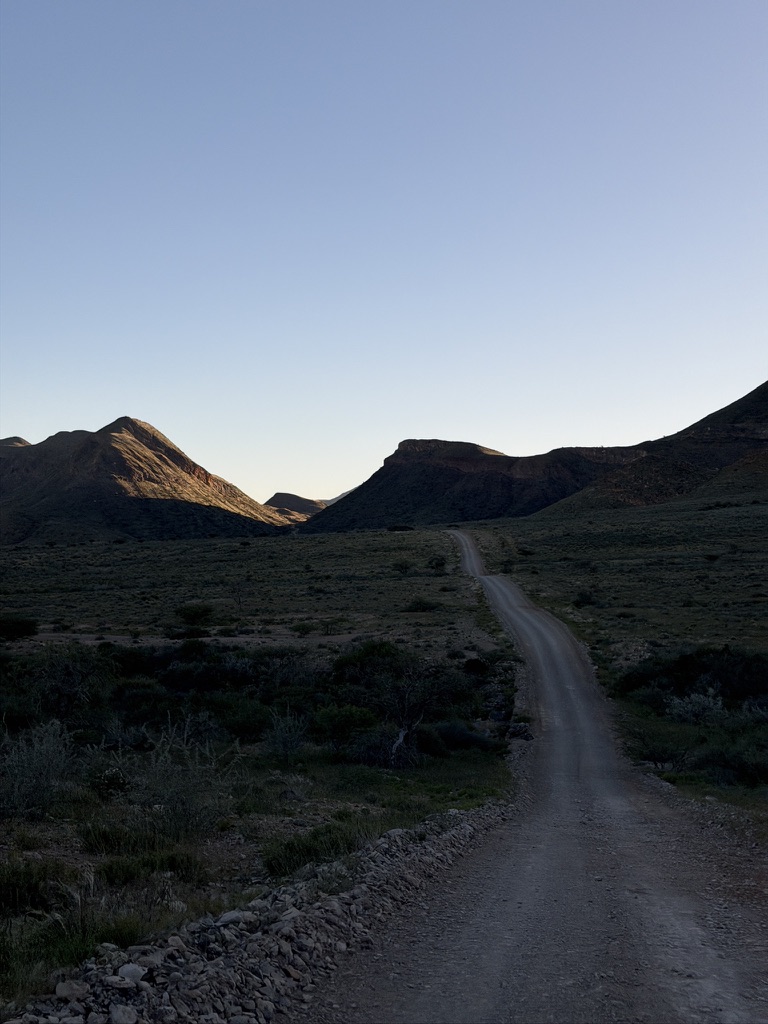
Naukluft National Park
Naukluft was one of the quieter parts of the trip, and that’s exactly why it worked so well as a starting point. The hikes here, like the Olive Trail and Waterkloof Trail, are more demanding than they initially seem, especially in the heat. But they also give you a first real sense of Namibia’s scale. There are long stretches where you don’t see anyone else, just rock formations, dry riverbeds, and wide valleys. It felt like a slower introduction before moving on to the more iconic highlights.
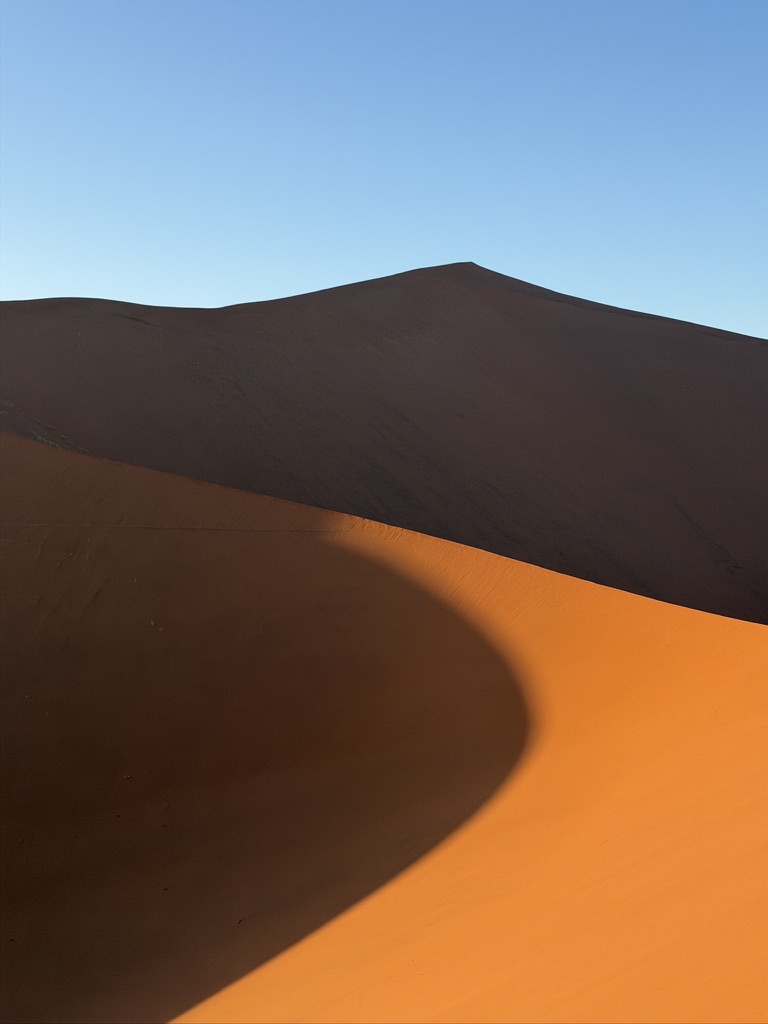
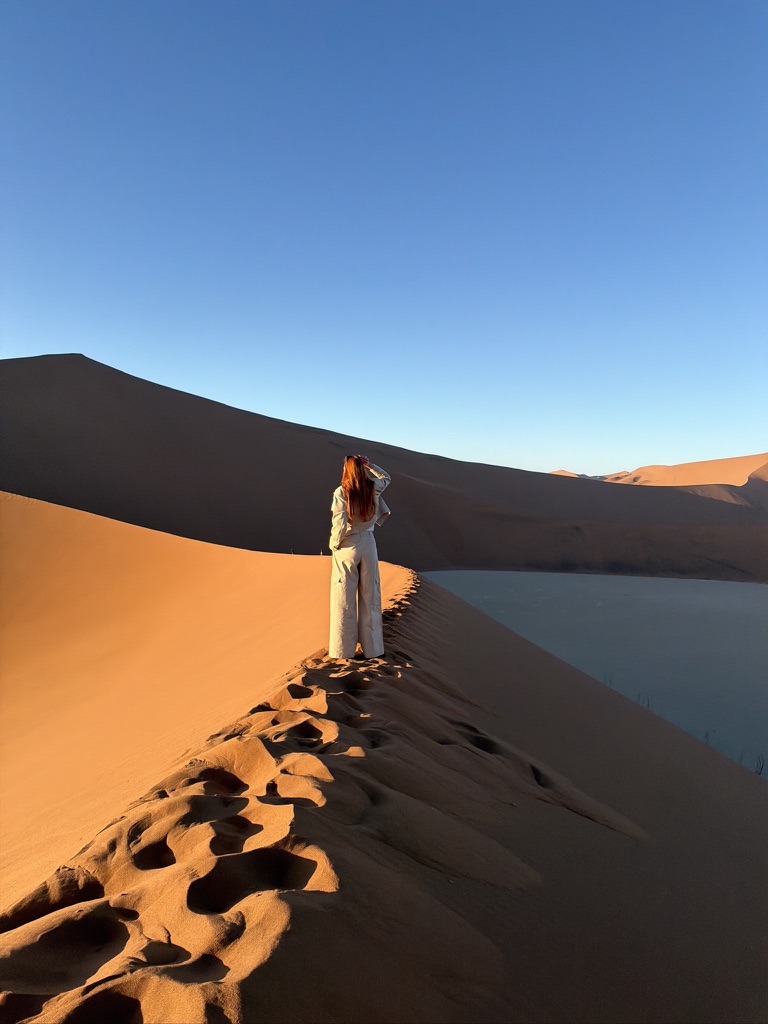
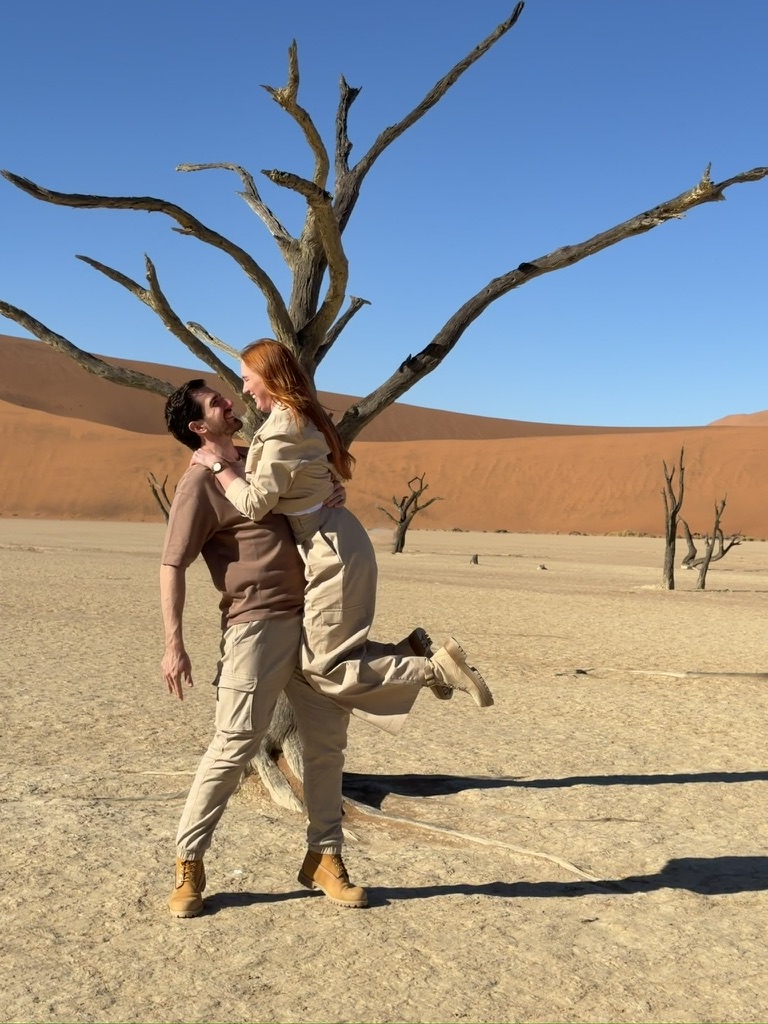
Sossusvlei and Deadvlei
From Naukluft, the landscape becomes more dramatic as you approach Sossusvlei. The dunes start appearing slowly, getting higher and more defined the closer you get. This is one of the places we had seen countless times in photos, but it still felt different in reality. The scale is larger, the silence more noticeable, and the light changes quickly throughout the morning.
What made it even more unusual was that the region had seen rainfall shortly before our visit—something that hadn’t happened in years. Parts of the landscape were noticeably greener than expected, which gave everything a slightly different feel. We weren’t quite sure whether to feel disappointed for not seeing the “classic” version, or lucky to experience something so rare.
We started early—really early—and that made all the difference. Sunrise at Deadvlei is one of those moments that defines the trip, with soft light, cooler air, and far fewer people than later in the day. Climbing dunes, walking through Deadvlei, and optionally adding a hot air balloon flight all fit naturally into this part of the itinerary.
Swakopmund (Coastal Stop)
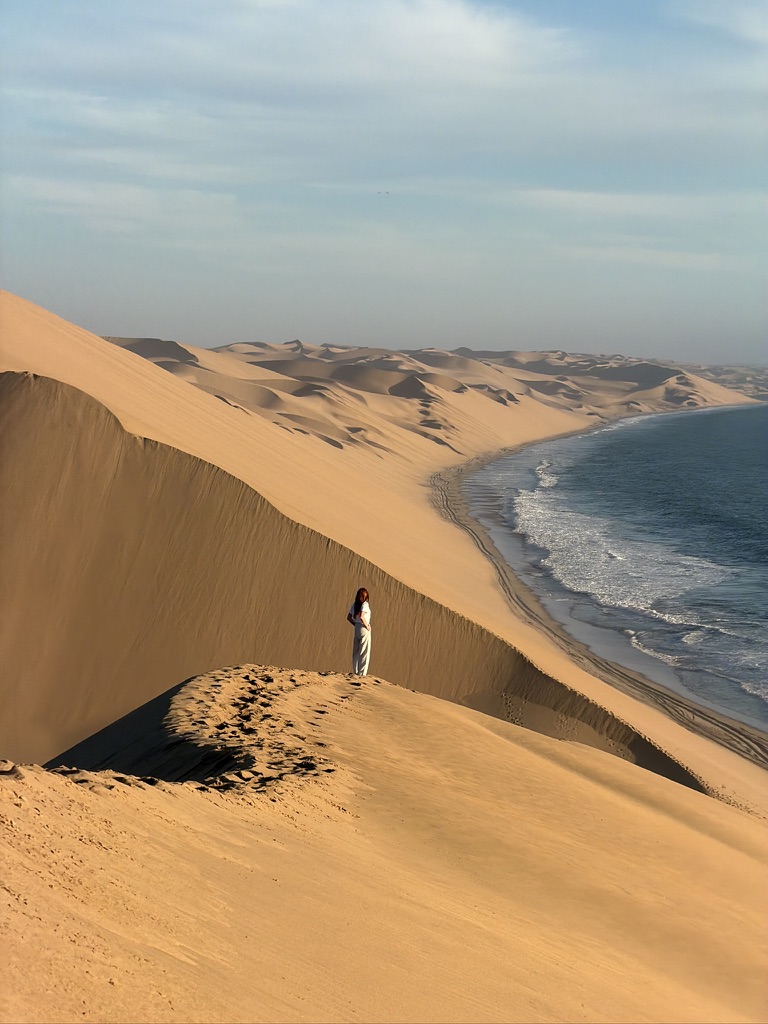
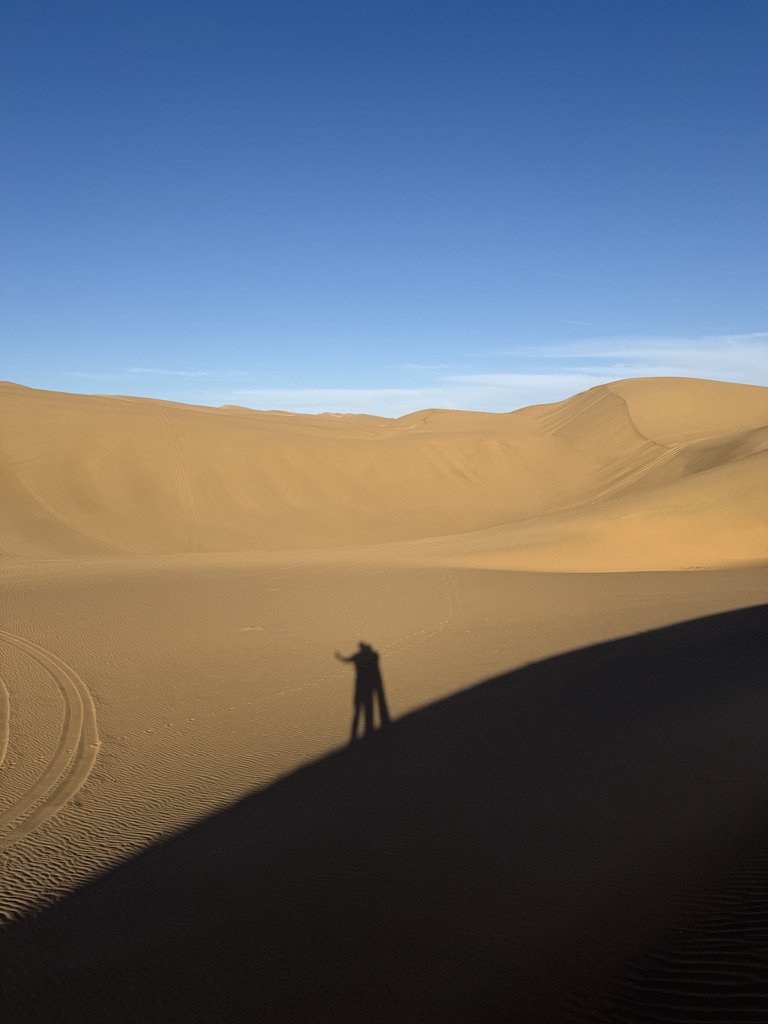
After days of heat, dust, and desert landscapes, arriving in Swakopmund almost feels disorienting. The air becomes colder, fog rolls in from the ocean, and suddenly there are cafés, palm trees, and buildings instead of dunes. It’s a complete shift—not just visually, but also in pace.
This is where the itinerary becomes more activity-based. Sandboarding, quad biking, and trips to Sandwich Harbour add a different type of energy to the trip. After several days of driving and early mornings, it felt like a well-timed break.

Spitzkoppe
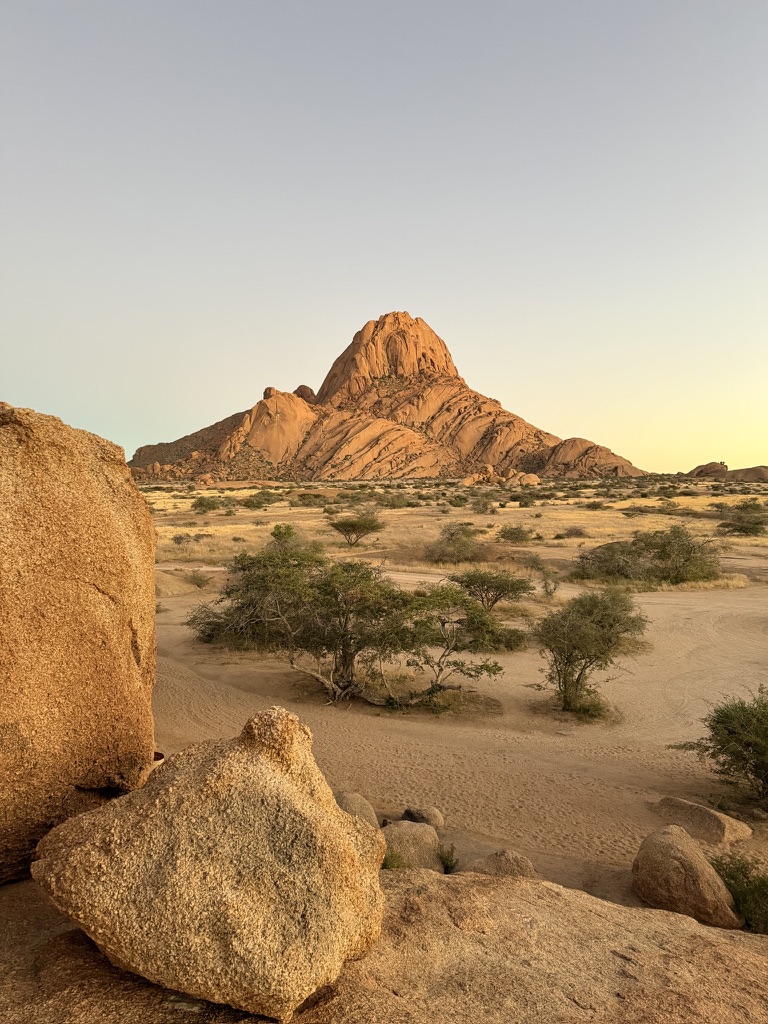
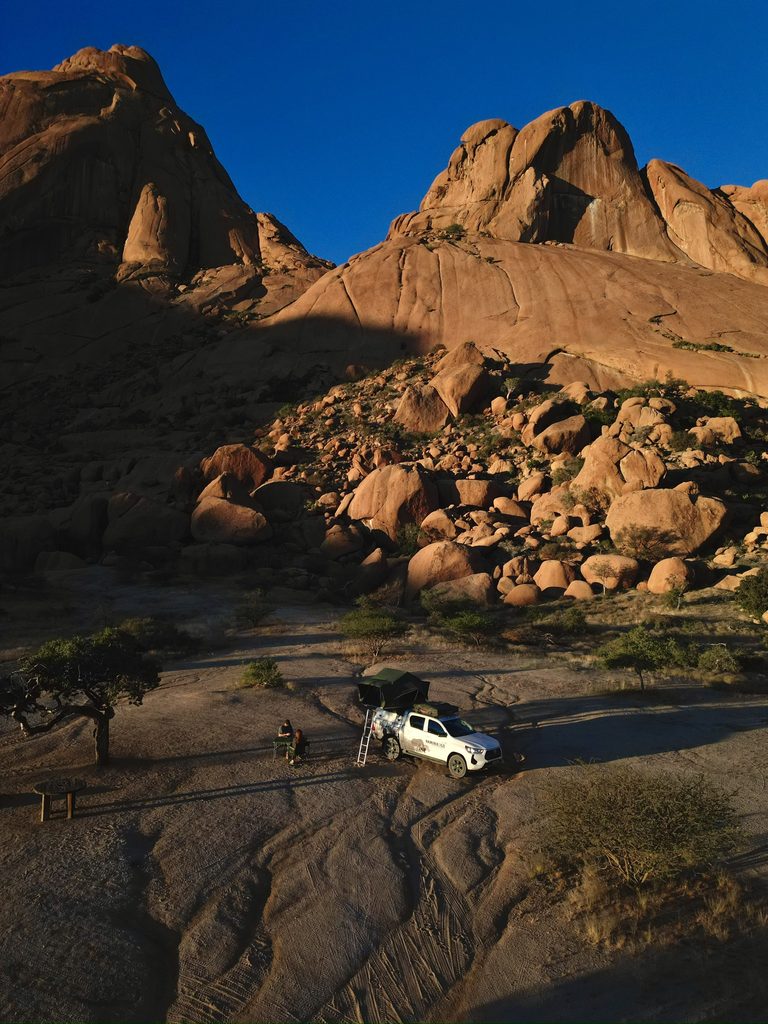
Spitzkoppe was one of the most unexpected highlights. The granite peaks rise out of the landscape almost suddenly, and once you’re there, everything slows down. There are very few facilities, which at first feels minimal, but quickly becomes part of the experience.
At night, the silence becomes complete. With no light pollution, the sky fills with stars in a way that’s difficult to describe. It was one of the moments where the remoteness of Namibia really stood out.
Skeleton Coast
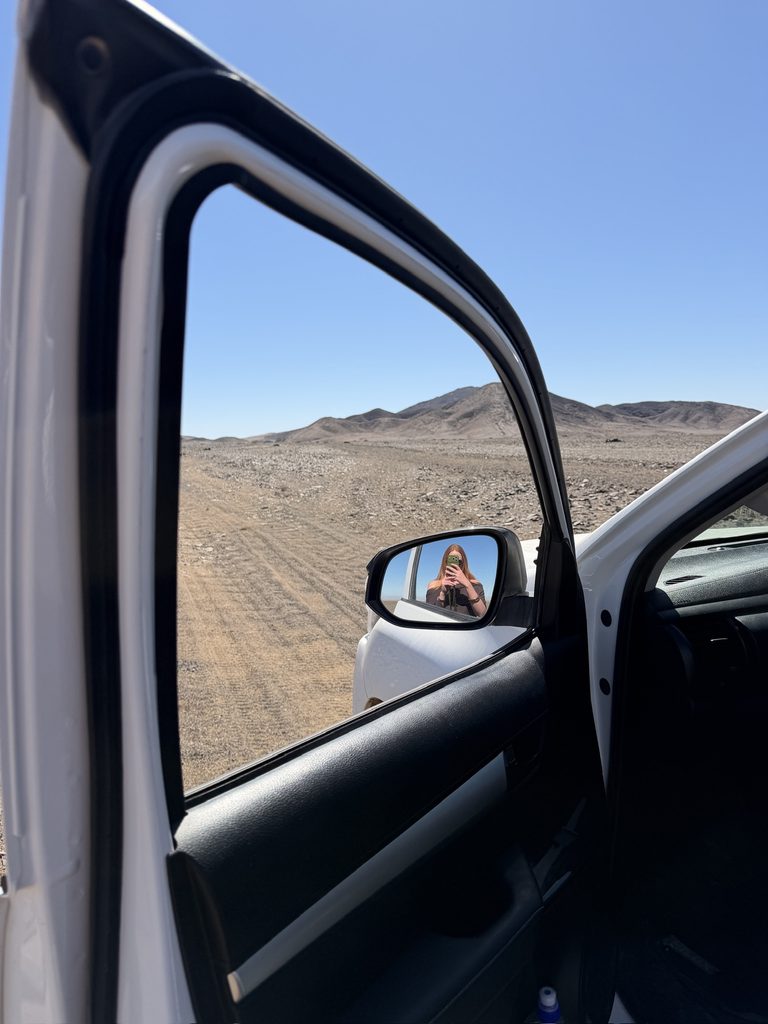
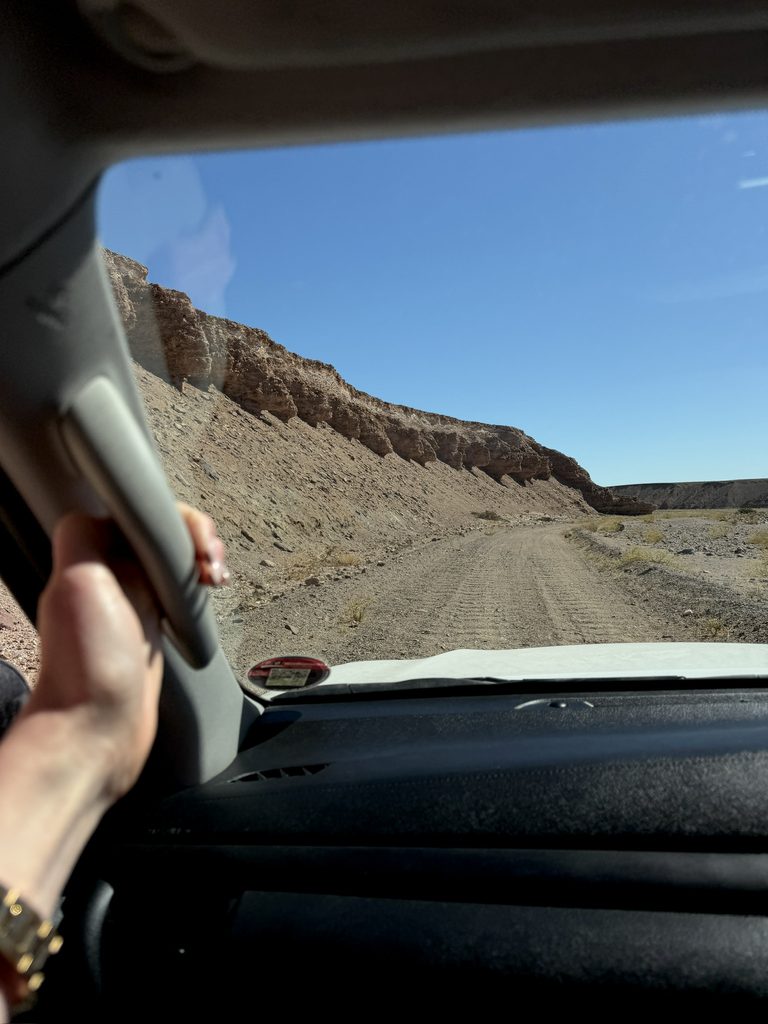
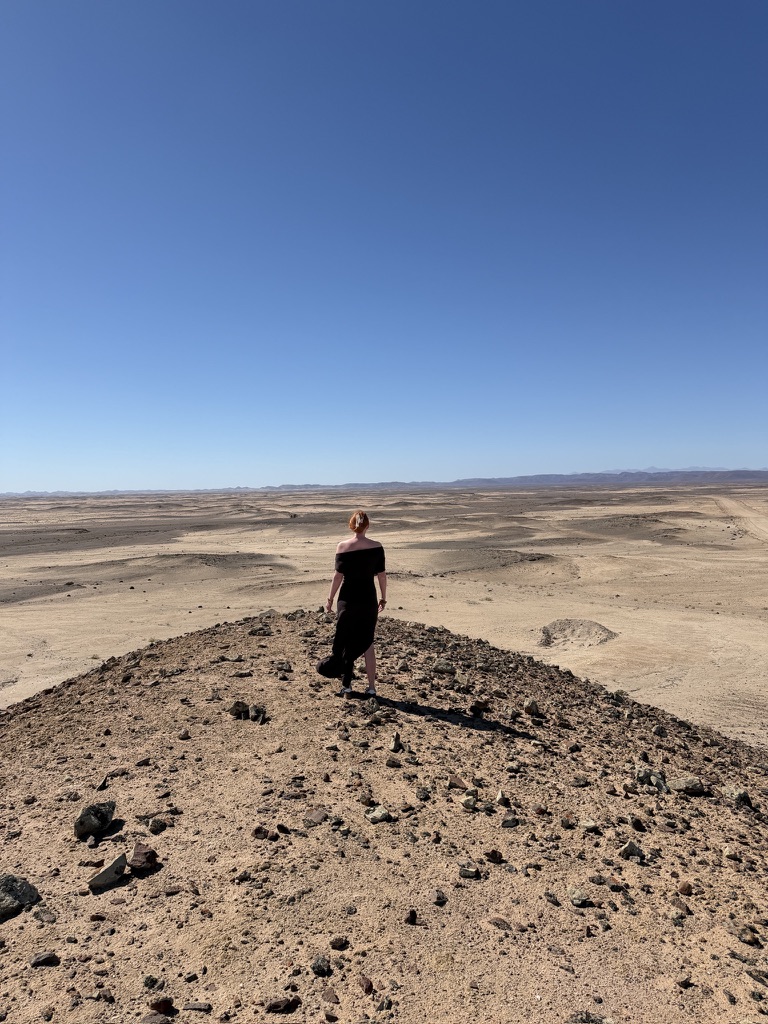
The journey to Damaraland follows the Skeleton Coast northwards along a long, almost perfectly straight road. For roughly 100 kilometres, the stark landscape and empty horizon create a striking sense of remoteness.
Damaraland (Grootberg Area)
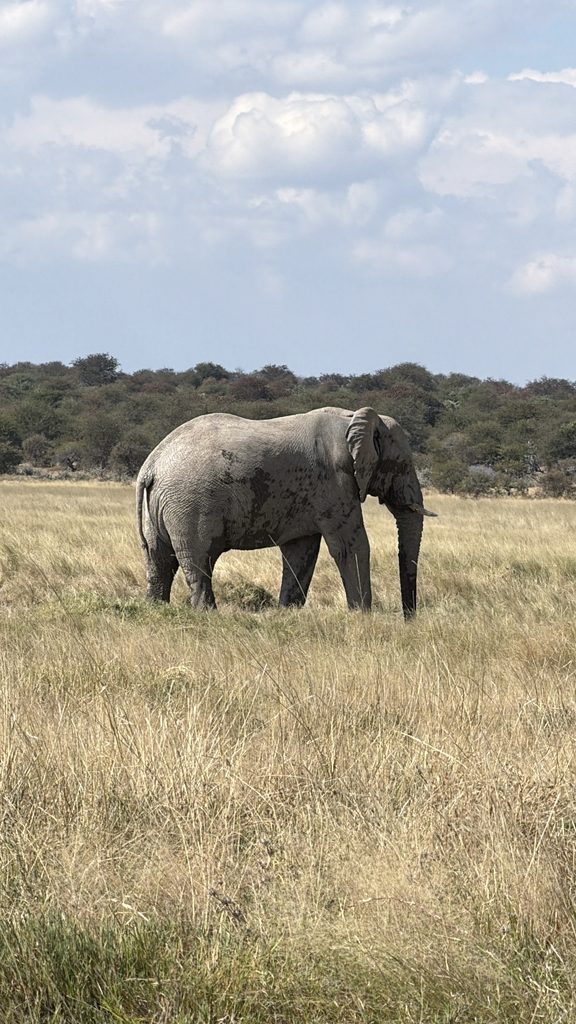
Continuing north, Damaraland introduces a more remote and less structured part of Namibia. The landscape is rugged and expansive, with fewer tourists and a stronger sense of isolation. This region is known for desert-adapted wildlife, including elephants and rhinos, although sightings are less predictable than in Etosha.
Etosha National Park
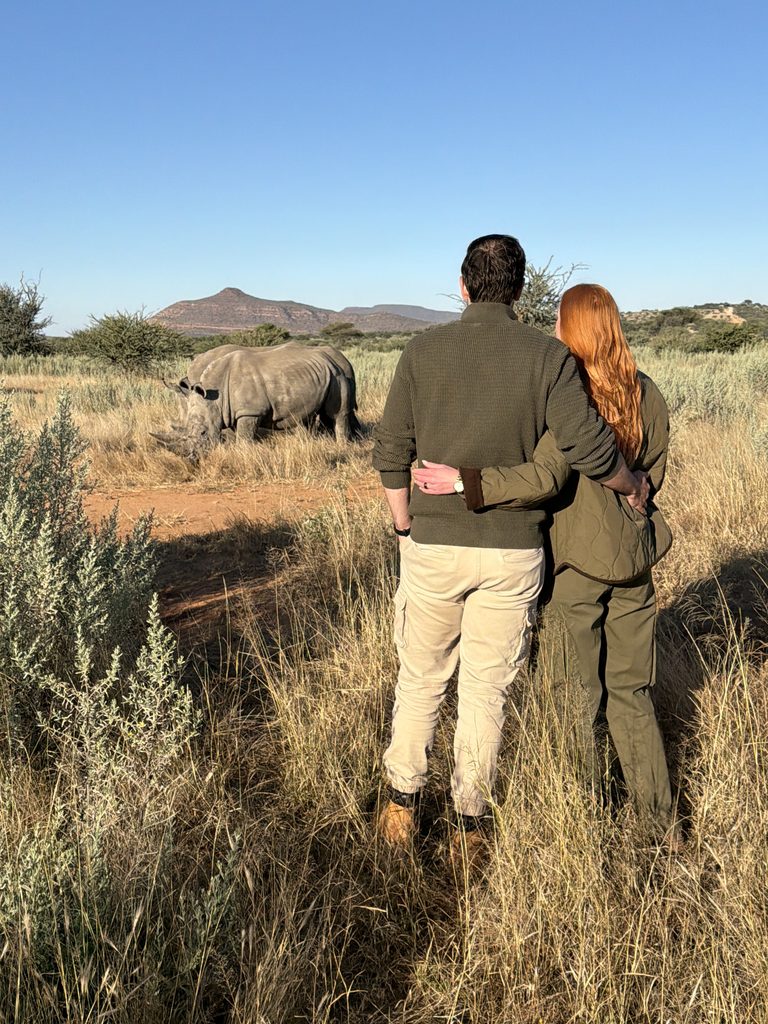
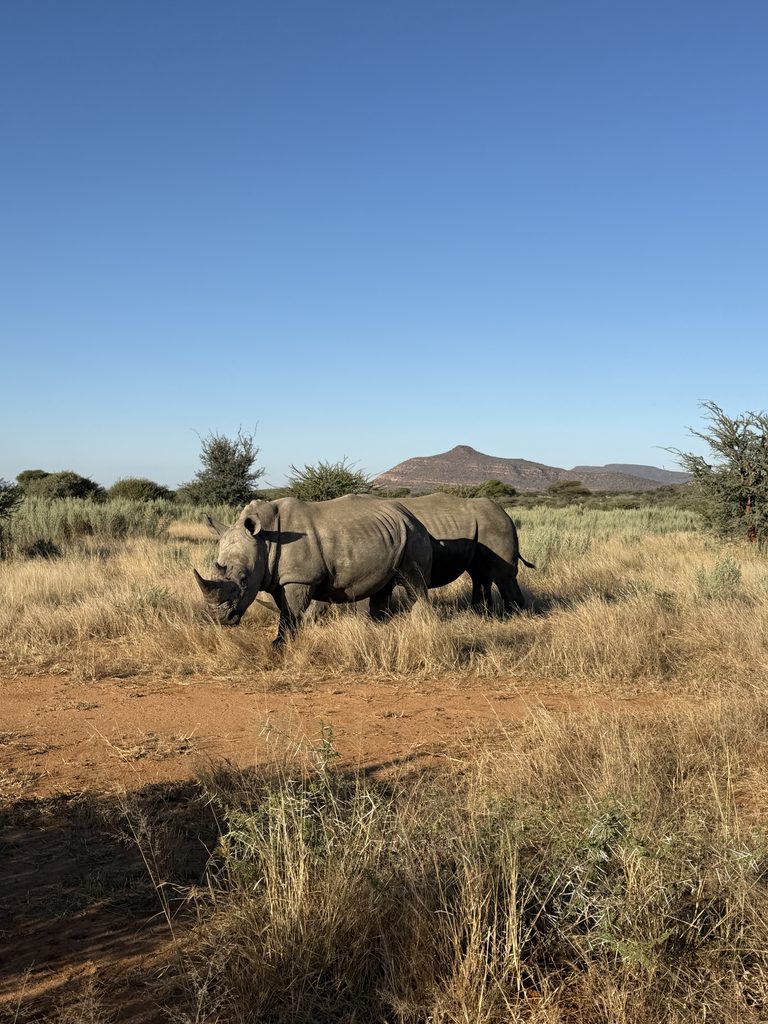
Etosha is the core safari destination of the itinerary. Compared to other African parks, it is particularly well suited for self-drive safaris, with a network of accessible roads and waterholes that attract wildlife.
Spending multiple days here allows you to explore different regions of the park. The western section tends to be quieter, while the eastern side offers easier access and a higher concentration of visitors. Driving through the park yourself makes it more engaging, but also more unpredictable. Some drives felt quiet, while others suddenly had multiple sightings within a short time. Sitting at waterholes often turned out to be more effective than constantly moving. Early mornings and late afternoons became the rhythm of the days, structured around animal activity rather than a fixed schedule.
Okonjima Nature Reserve
After Etosha, Okonjima provides a more curated and conservation-focused experience. Known for its work with big cats, particularly leopards, it offers guided activities that differ from the self-drive format of Etosha. Tracking leopards was one of the more memorable experiences, partly because it’s something you’re unlikely to do independently.
Return to Windhoek
By the end of the trip, slowing down becomes more important. After nearly three weeks of driving, early mornings, and constant movement, ending near Windhoek with a more comfortable stay creates a clear transition toward going home. Looking back, finishing the trip this way worked better than starting with it.
Highlights of This Namibia Honeymoon Itinerary
What stood out most was not just the individual locations, but how different they felt from each other. Within a single trip, you move from dunes to ocean, to mountains, to safari landscapes. That constant variation kept the trip from feeling repetitive, even over three weeks.
Practical Tips for a Namibia Road Trip
Driving is a central part of the experience in Namibia, and planning realistic distances is essential. Roads are often gravel, and travel times can be longer than expected. Limiting driving to around four to five hours per day improves both safety and enjoyment.
Accommodation should be booked in advance for key locations, particularly Etosha. We found that combining camping with lodge stays created the right balance between experience and comfort over a longer trip.
Packing should account for temperature variation. Even in May, during the colder dry season, mornings and nights can be surprisingly cold, especially in desert regions.
